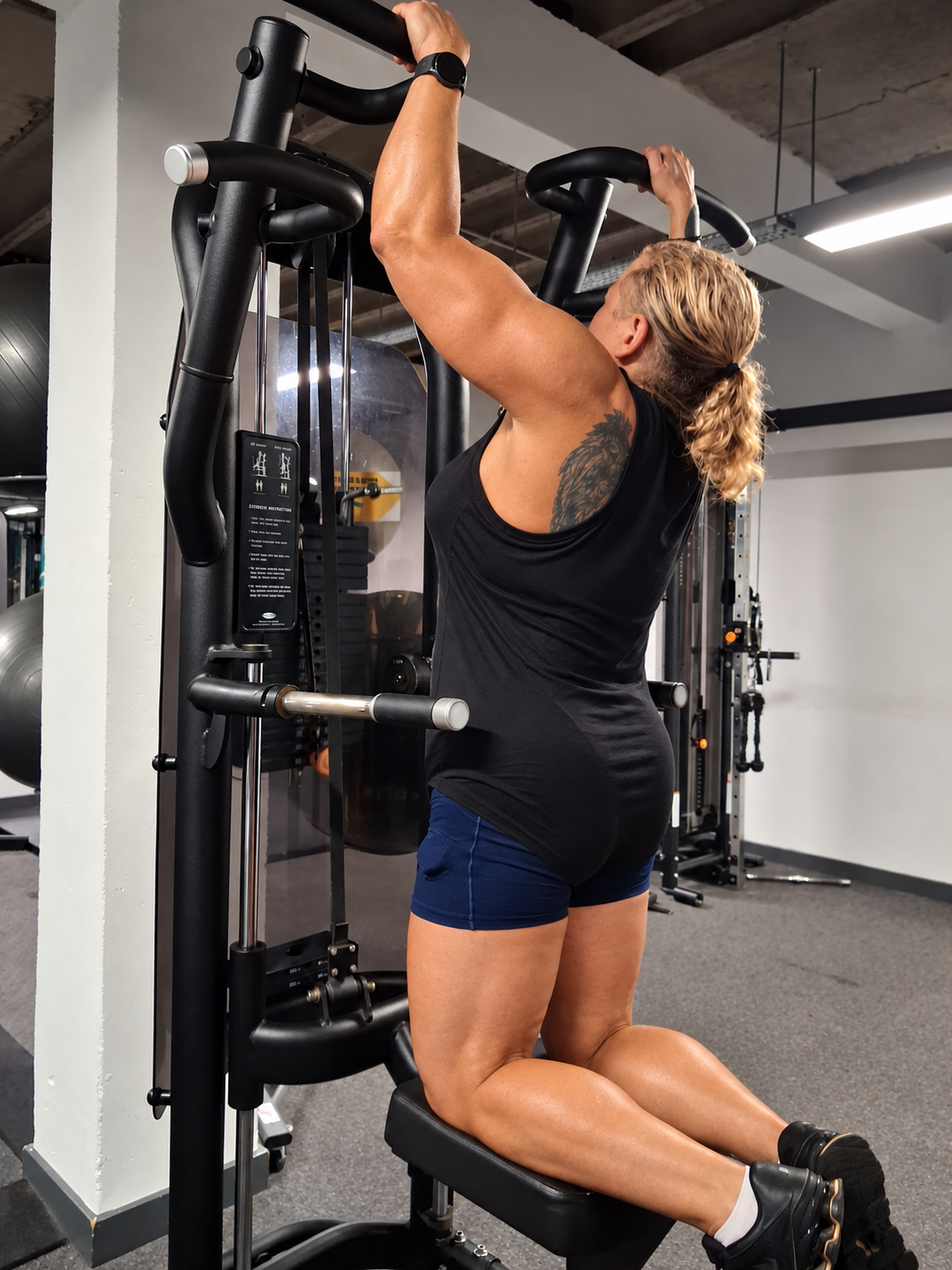
Building muscle isn't just about lifting heavier weights. It's about training intelligently, progressively challenging your muscles and allowing your body to adapt. At Steph Scully Fitness, I believe understanding why we train is just as important as knowing how.
What is muscle hypertrophy?
Muscle hypertrophy is an increase in the size of skeletal muscle fibres. Resistance training creates mechanical tension that signals your body to adapt. With sufficient nutrition and recovery, muscles can grow over time.
What actually drives muscle growth?
Mechanical tension from challenging, controlled resistance exercise is central. A muscle pump and post-workout soreness are not reliable indicators of growth; excessive muscle damage is not the goal.
Progressive overload
Gradually challenge yourself by adding repetitions, increasing resistance or improving technique and range of motion. For example, build from 3 sets of 8 reps to 3 sets of 12 with the same dumbbells, then increase the weight and work back up. Progress need not occur every week.
Sets, reps and effort
Muscle can grow across a wide repetition range when sets are sufficiently challenging. A practical starting point is 2–4 sets of 6–15 repetitions per exercise, often finishing with around 1–3 repetitions in reserve. Weekly volume should reflect your experience and recovery.
How often should you train?
Training each major muscle group around twice weekly is a practical way to spread challenging sets across the week. Full-body, upper/lower and other splits can all work when weekly volume and recovery are appropriate.
Nutrition for hypertrophy
Adequate protein helps support muscle protein synthesis. Around 1.4–2.0 g of protein per kilogram of body weight daily is a useful range for many healthy adults who lift weights. Carbohydrates fuel sessions, dietary fats support health and overall calorie intake should match your goals.
Can you build muscle while losing fat?
Yes. Body recomposition can be especially achievable for beginners and people returning to training. Combine progressive resistance exercise, adequate protein, a manageable calorie deficit if fat loss is the goal and consistent recovery.
Recovery matters
Muscles adapt between workouts. Prioritise sleep, appropriate rest, hydration and a sustainable training schedule. Being sore after every session is not a requirement for results.
Building muscle after 40 or 50
Strength training remains valuable throughout adulthood, including during perimenopause and menopause. It can support strength, bone health, physical function and confidence. Your programme should reflect your health, experience and recovery.
Common mistakes
Avoid constantly changing your programme, lifting without enough effort, neglecting protein, skipping recovery and expecting instant results. Track your performance and give your plan time to work.
YOUR NEXT STEP
READY TO BUILD A STRONGER YOU?
I offer personalised one-to-one strength and body-recomposition coaching at PureGym Brighton Central. Let's discuss your goals and build a plan that works for you.
BOOK YOUR FREE 15-MINUTE CONSULTATION ↗Further reading
Schoenfeld (2010), The mechanisms of muscle hypertrophy, Journal of Strength and Conditioning Research; Schoenfeld et al. (2017), Weekly training volume and muscle mass, Journal of Sports Sciences; Morton et al. (2018), Protein supplementation and resistance training, British Journal of Sports Medicine.